
CASE 3
A possible path in
every circumstance
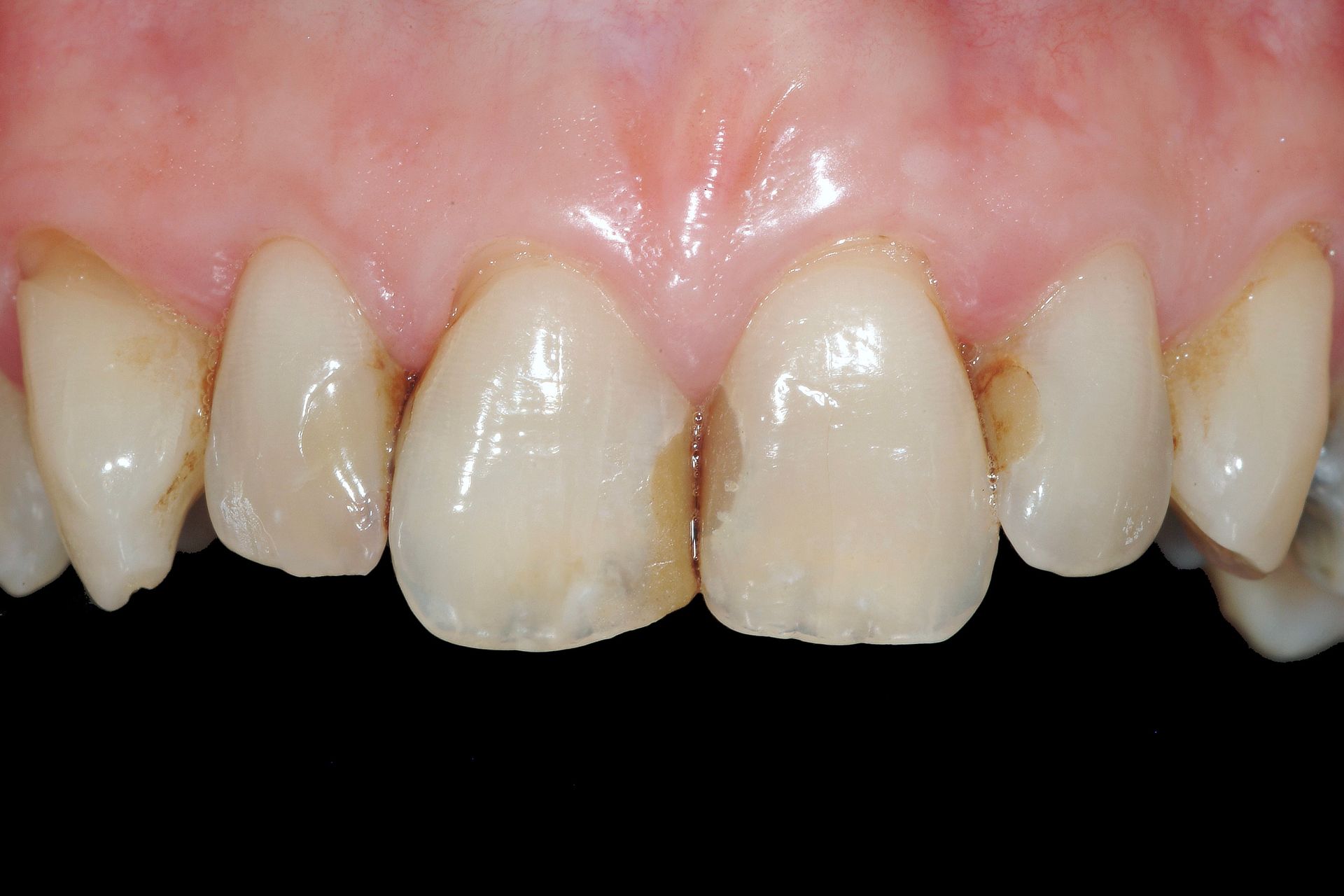
Even in more complex situations, where misalignment, infiltration of old restorations, and carious lesions are combined, composite resin veneers can represent a highly appropriate solution.
This is because composite resin is shaped directly on the teeth, inside the mouth. It can be adapted, refined, layered, polished, and sculpted according to the specific needs of each tooth and each smile. The great sculptors of the past taught us how beautiful forms could emerge from a block of marble through a subtractive process. With composite resin, the approach is the opposite: we work by addition. But the principle remains the same, we must have a clear three-dimensional vision of the final result before our hands begin to shape the material.
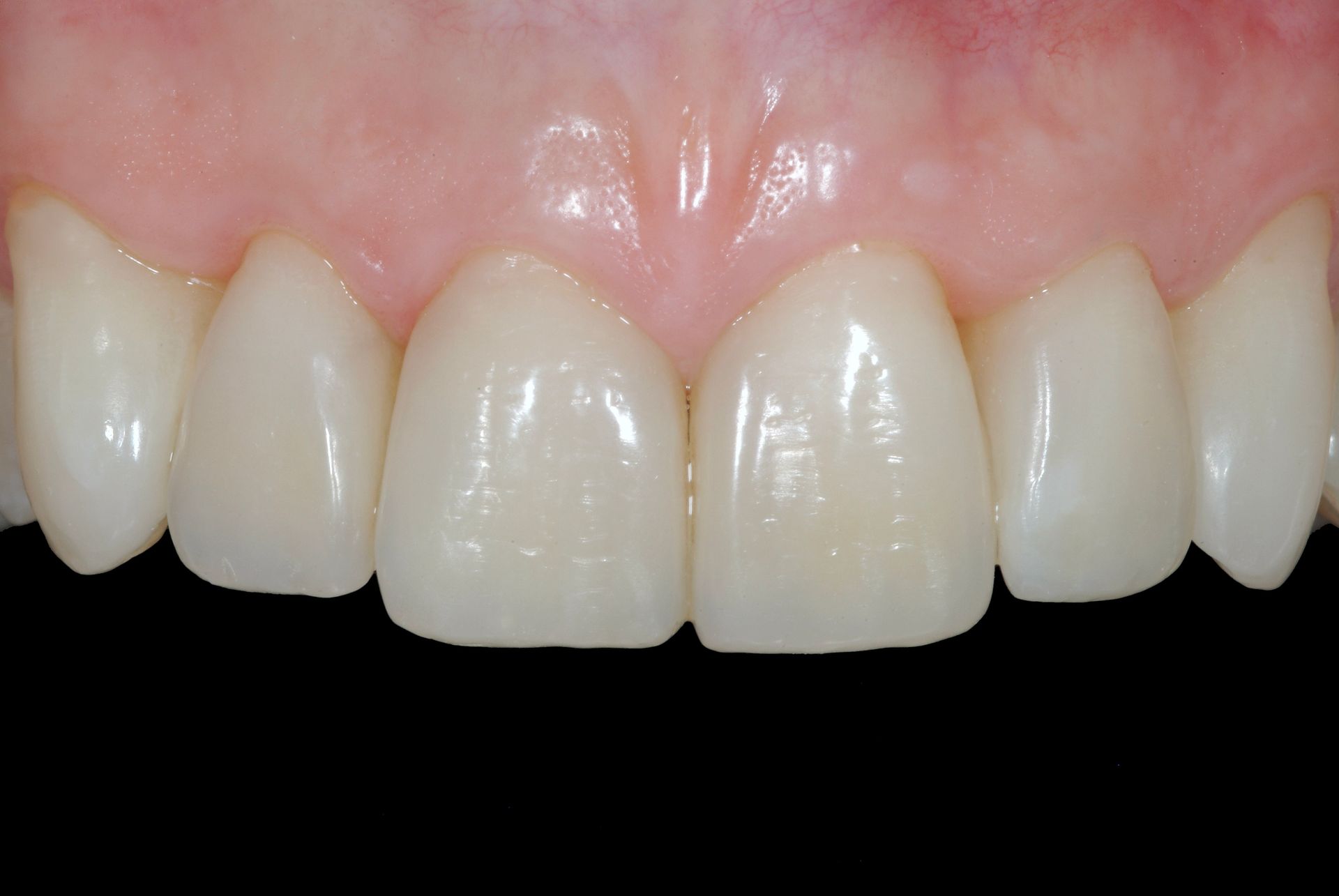
It is precisely in the creation of direct composite veneers that the artistic dimension of dentistry becomes most visible. The clinician’s eye, sensitivity, and manual skill come together to guide every detail: the proportions, the line angles, the surface texture, the light reflection, and the natural integration with the surrounding teeth.
In this case, composite resin allowed us to restore aesthetics, improve harmony, and manage several clinical problems at the same time, while preserving as much natural tooth structure as possible. The final result shows how, even in demanding situations, a minimally invasive approach can become a powerful tool to rebuild not only the smile, but also the patient’s confidence in it.