
CASE 3
When decay strikes again
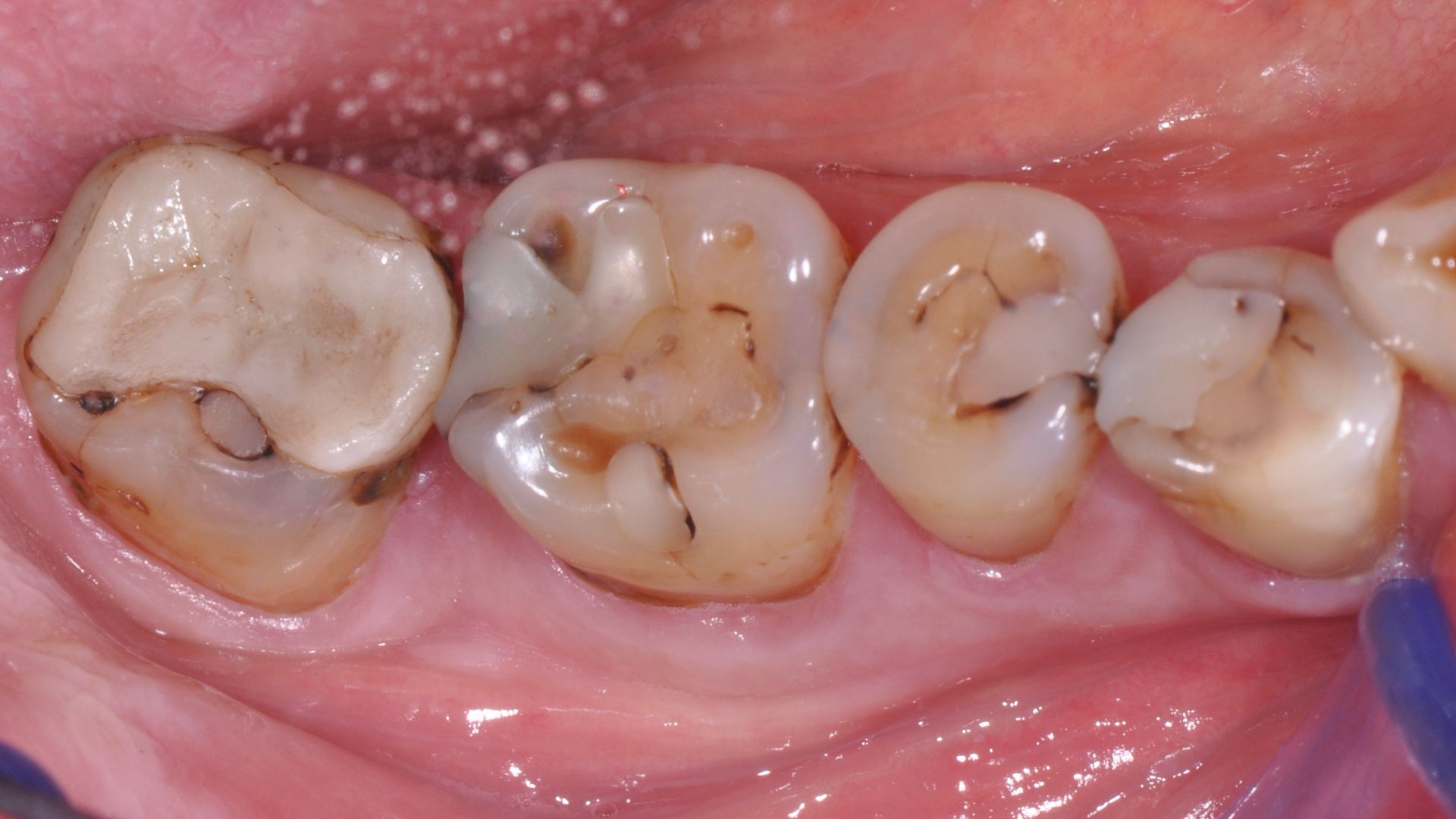
This is another case in which time has left its mark, but here the main problem was the most common dental disease of all: tooth decay.
Even after many years of apparent stability, caries can become active again. It may develop beneath or around existing restorations, causing marginal leakage and recurrent decay, or appear as entirely new lesions that can sometimes reach a considerable size.
Whatever the original cause of tooth structure loss (decay, fracture, or wear) the consequence is ultimately the same: the tooth has lost part of its structure and needs to be rebuilt. When the cavities are particularly extensive, indirect restorations fabricated outside the mouth can provide greater precision, strength, and control of the final anatomy.
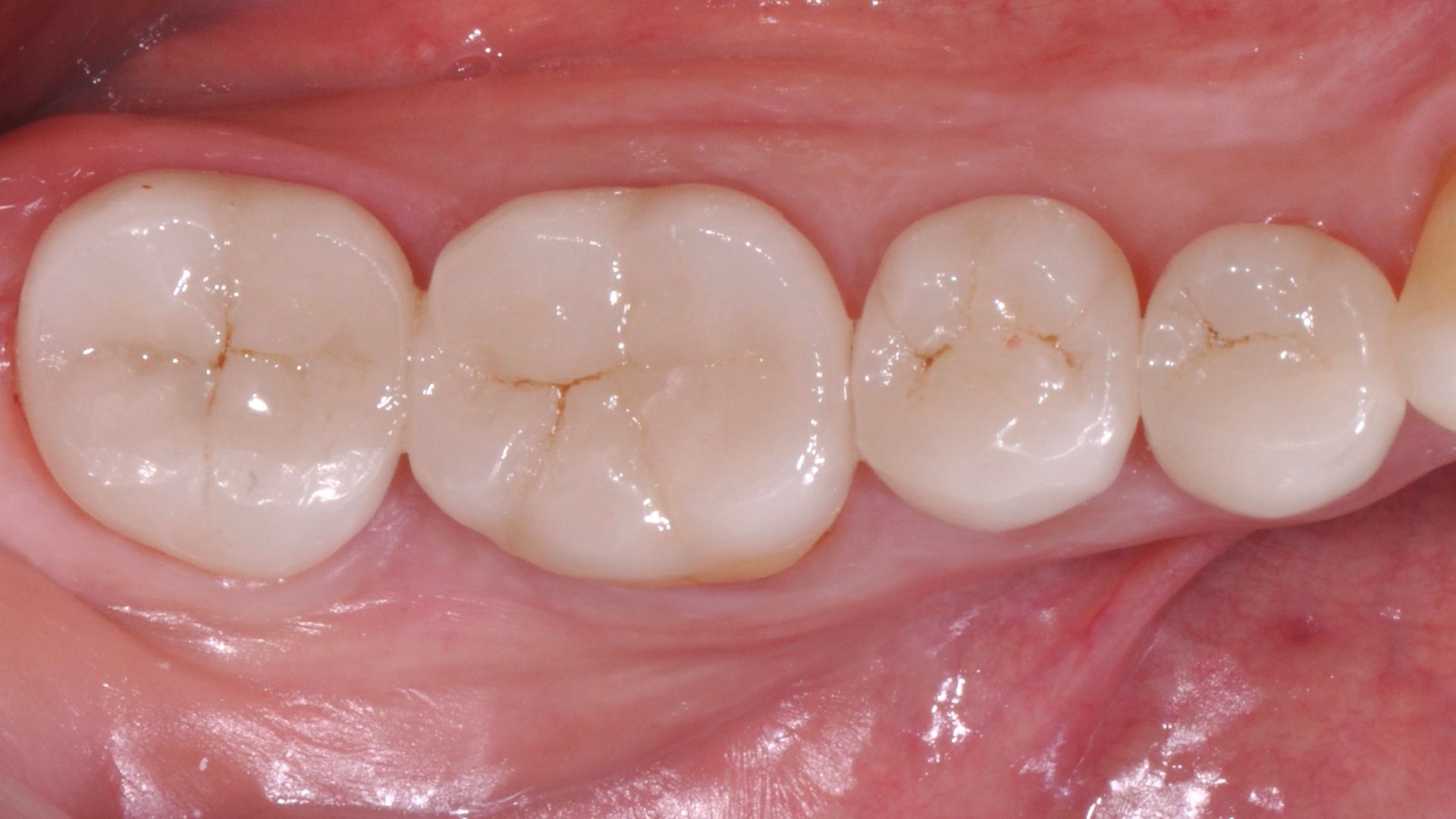
In this case, treatment was performed one quadrant at a time. The decayed tissue and compromised restorations were carefully removed, while preserving as much healthy tooth structure as possible. Each affected tooth was then restored with an adhesively bonded, all-ceramic onlay, using conservative and minimally invasive preparation techniques.
This approach made it possible to rebuild the damaged teeth, protect the weakened cusps, and restore proper function and anatomy. The final restorations blend naturally with the surrounding dentition, demonstrating how even extensive damage caused by caries can be treated without unnecessarily sacrificing healthy tooth structure.