
CASE 1
From silver past to
natural future
For many decades, silver amalgam was one of the most widely used materials for direct restorations in posterior teeth, including large and extensive fillings. Today, it has largely been replaced by metal-free alternatives such as resin composite and all-ceramic restorations, which offer improved aesthetics and allow for more conservative adhesive treatment approaches.
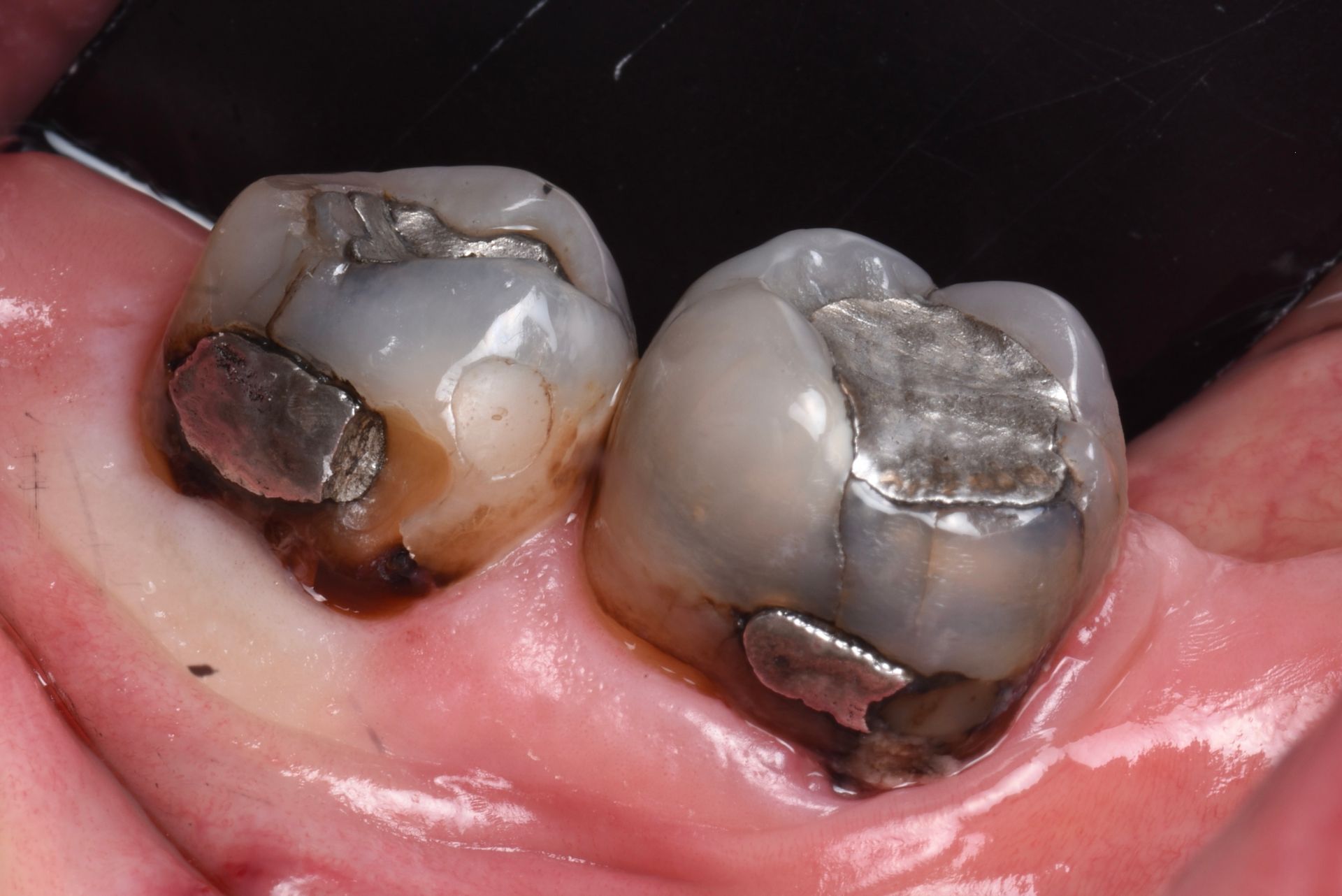
Nevertheless, it is still relatively common to treat patients with amalgam restorations that were placed 20 or even 30 years ago. In this case, the patient began experiencing problems with the lower right molars: portions of the existing restorations had started to detach, while several cracks had developed in the remaining tooth structure.
After removal of the old amalgam restorations, all decayed and infiltrated tissue was carefully eliminated. The teeth were then prepared for full cuspal-coverage onlays. This conservative approach made it possible to preserve the vitality of the teeth while protecting the weakened cusps and maintaining as much healthy tooth structure as possible. The margins were carefully refined to ensure an accurate digital impression and an optimal fit of the final restorations.
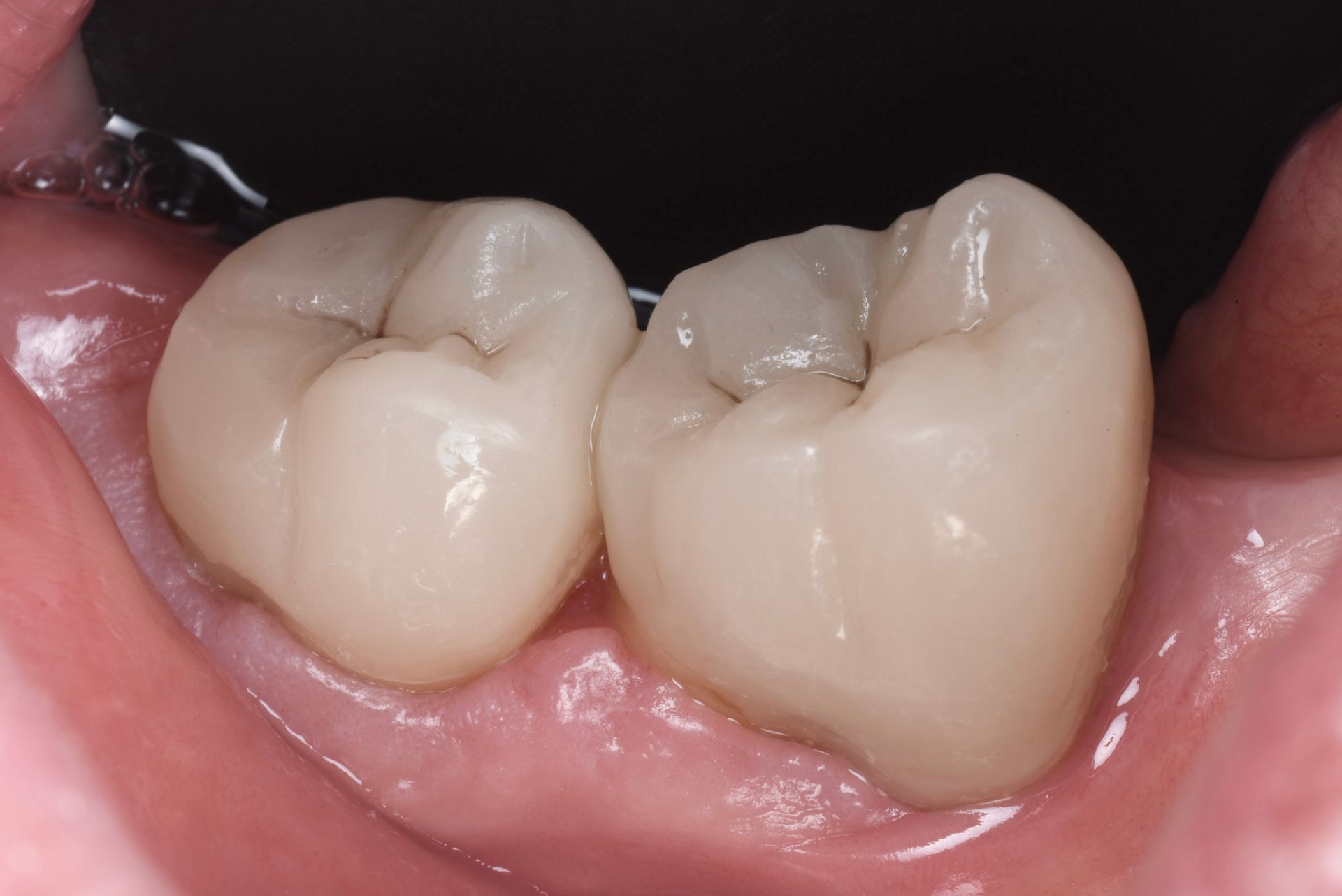
The onlays were digitally designed and manufactured from CAD/CAM resin composite. Once bonded to the teeth, they restored the original anatomy, reinforced the remaining tooth structure, and re-established proper chewing function. The final result also shows how modern metal-free restorations can integrate naturally with the surrounding teeth, combining strength, precision, and aesthetic harmony.
Last but not least: the removal of silver amalgam restorations should always be performed under rubber dam isolation. This helps prevent particles and debris released during the procedure from being swallowed by the patient, while also providing a cleaner and safer operative environment.