
CASE 2
When Time Leaves Its Mark
Dental restorations cannot, unfortunately, last forever. Over time, they may wear, fracture, lose their marginal integrity, or no longer adapt perfectly to the surrounding tooth structure. However, ageing does not affect the restoration alone: the natural tooth continues to change as well. The cusps gradually lose their original anatomy, the surfaces become worn, and cracks or fractures may appear. This progressive process is known as tooth wear and can be considered part of the natural ageing of the dentition.
Within certain limits, tooth wear can simply be monitored and managed through preventive measures. When it becomes more advanced, however, it may compromise the strength, function, and long-term stability of the teeth, making a more extensive restorative treatment necessary.
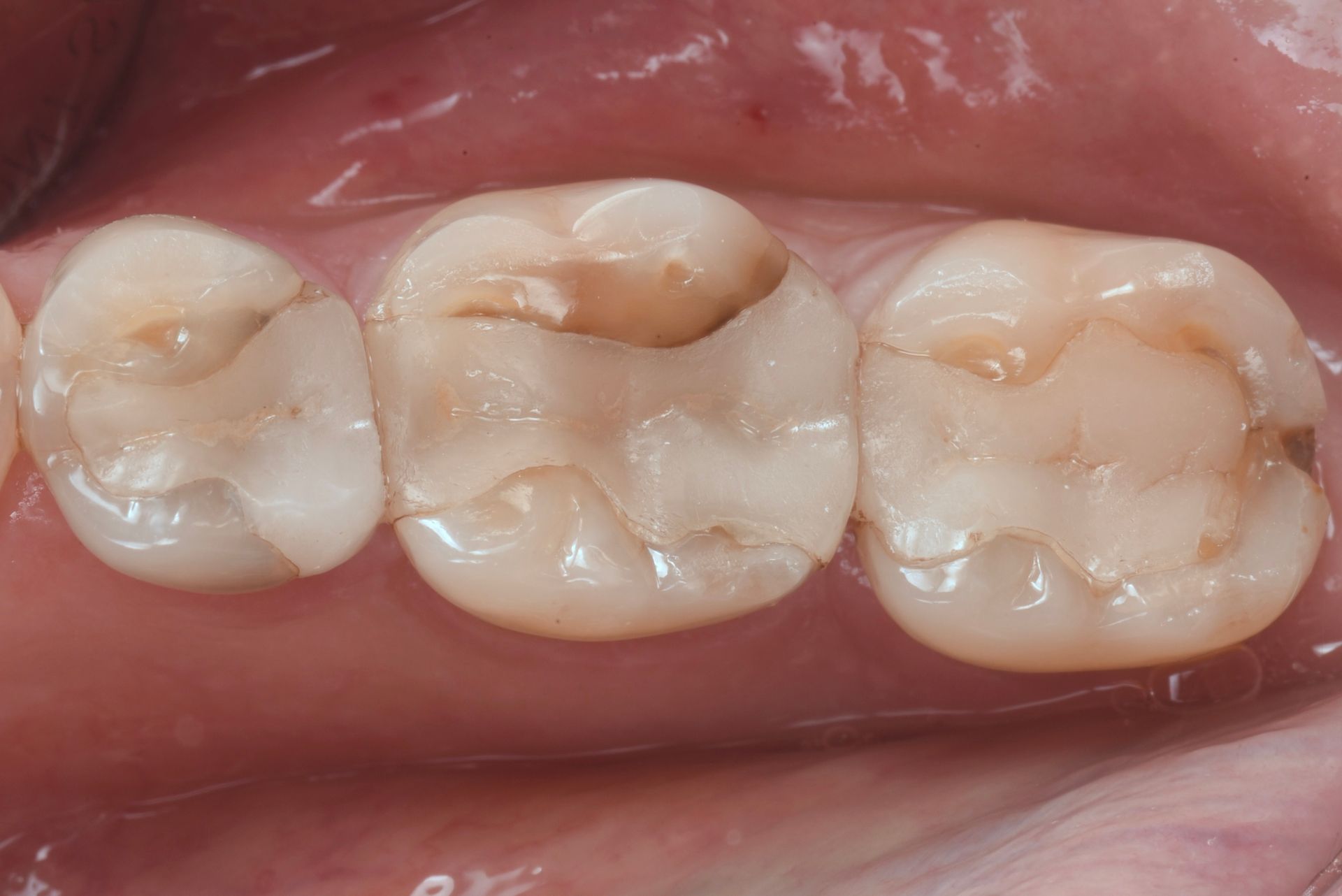
This patient presented with ceramic inlays that had been placed more than 20 years earlier. The combination of ageing restorations, marginal deterioration, loss of cuspal anatomy, and progressive tooth wear made it necessary to restore the entire quadrant.
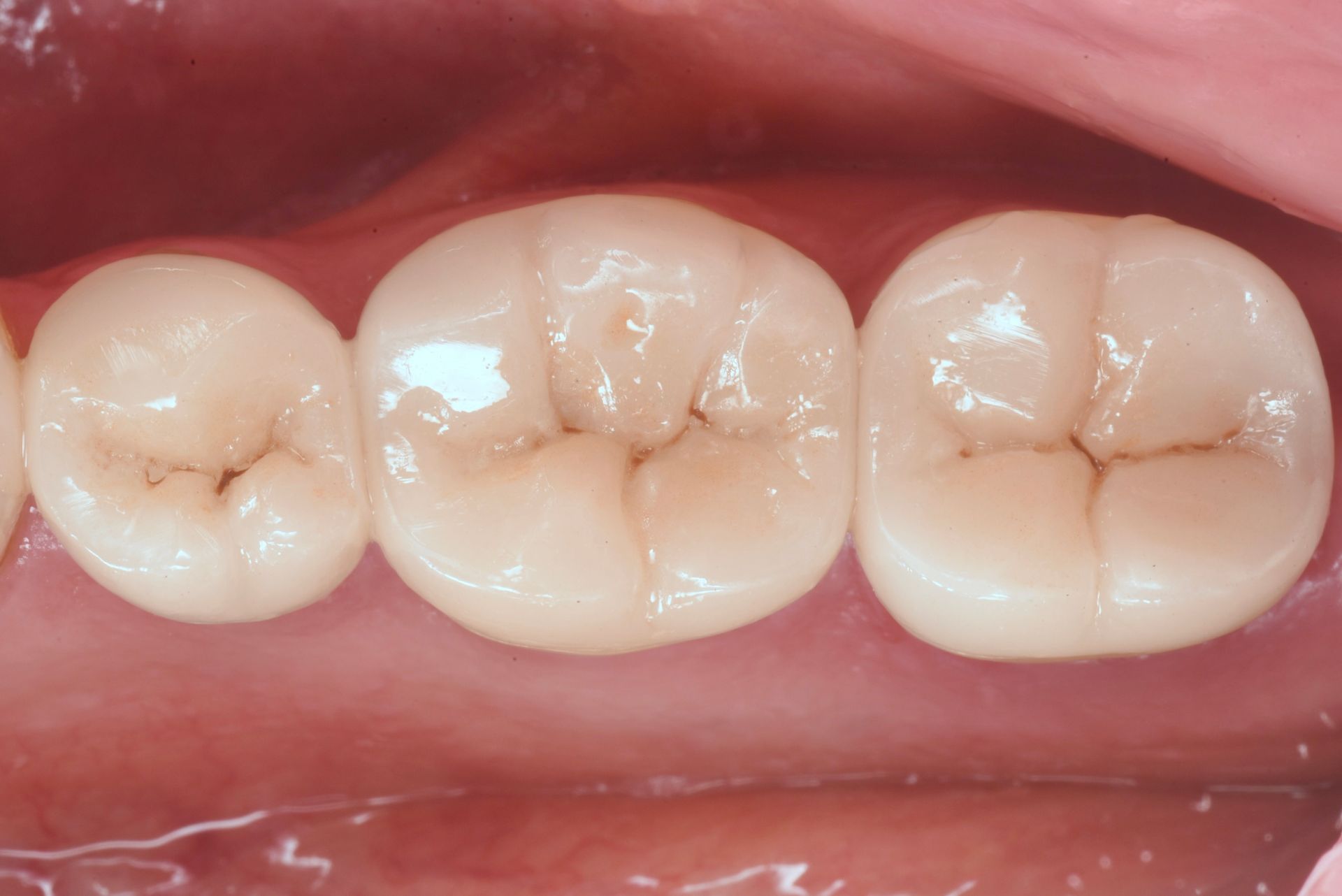
The existing restorations were removed, and the teeth were treated using conservative preparations designed to preserve as much healthy tooth structure as possible. Full cuspal-coverage onlays were then created from all-ceramic lithium disilicate, providing the strength required to protect the remaining tooth structure while restoring the original anatomy and chewing function.
To achieve an exceptionally natural result, individual colour characterisations were added within the grooves and fissures of the restorations. These subtle details allowed the ceramic onlays to blend seamlessly with the surrounding teeth, creating a highly realistic and harmonious integration within the mouth.